
IT Asset Management: Why It Matters More in Modern Infrastructure
IT asset management is no longer just about inventory. In today's hybrid and AI-driven environments, it has become a capability that directly impacts cost, efficiency, and system stability.
- What Is IT Asset Management?
- Why IT Asset Management Software Is Critical Today
- The Real Problem: IT Asset Management Without Real Visibility
- Sensaka Approach: IT Asset Management That Starts from Reality
- True Asset Discovery Without Blind Spots
- Full Lifecycle Management with Real-Time Accuracy
- Hardware-Level Monitoring That Traditional ITAM Misses
- Energy and Capacity Optimization Built into Asset Management
- Agentless Architecture That Scales Across Complex Environments
- IT Asset Management Is Becoming Infrastructure Intelligence
- Final Thought
What Is IT Asset Management?
IT Asset Management (ITAM) is fundamentally about managing and tracking all IT resources across their full lifecycle. These resources include not only servers, storage, and network equipment, but also software licenses and various cloud resources.
At its core, ITAM is built around a few key objectives: maintaining clear visibility of assets, improving resource utilization, and ensuring that these assets support business growth. In theory, it spans the entire lifecycle from procurement and deployment to operation and eventual retirement, forming a closed loop.
In practice, it rarely works that cleanly. With the rise of hybrid architectures and AI-driven environments, ITAM has become significantly more complex. It is no longer just a record-keeping system, but a capability that directly impacts cost, efficiency, and system stability.
Why IT Asset Management Software Is Critical Today
One defining characteristic of modern infrastructure is increasing complexity. Multi-vendor hardware, hybrid cloud environments, and GPU clusters have made system architectures more distributed. At the same time, workloads are constantly evolving, adding another layer of difficulty.
In this context, the absence of a reliable IT asset management system does not lead to slow degradation. Problems tend to accumulate quickly. Many teams run into a basic but difficult question: what assets are actually running right now?
From there, issues begin to surface. Asset records become inaccurate, lifecycle states are hard to track, and capacity planning lacks a solid foundation. Hardware-level issues often go unnoticed due to limited visibility, only becoming apparent after service disruption.
These are not new problems, but at scale, their impact grows disproportionately.
Traditional ITAM tools typically rely on centralized databases to manage asset information. Conceptually, this makes sense. In practice, however, they depend heavily on manual input or agent-based data collection.
The result is often delayed updates, incomplete coverage, and unavoidable blind spots. The system may appear complete, but the underlying data is inconsistent and sometimes unreliable.
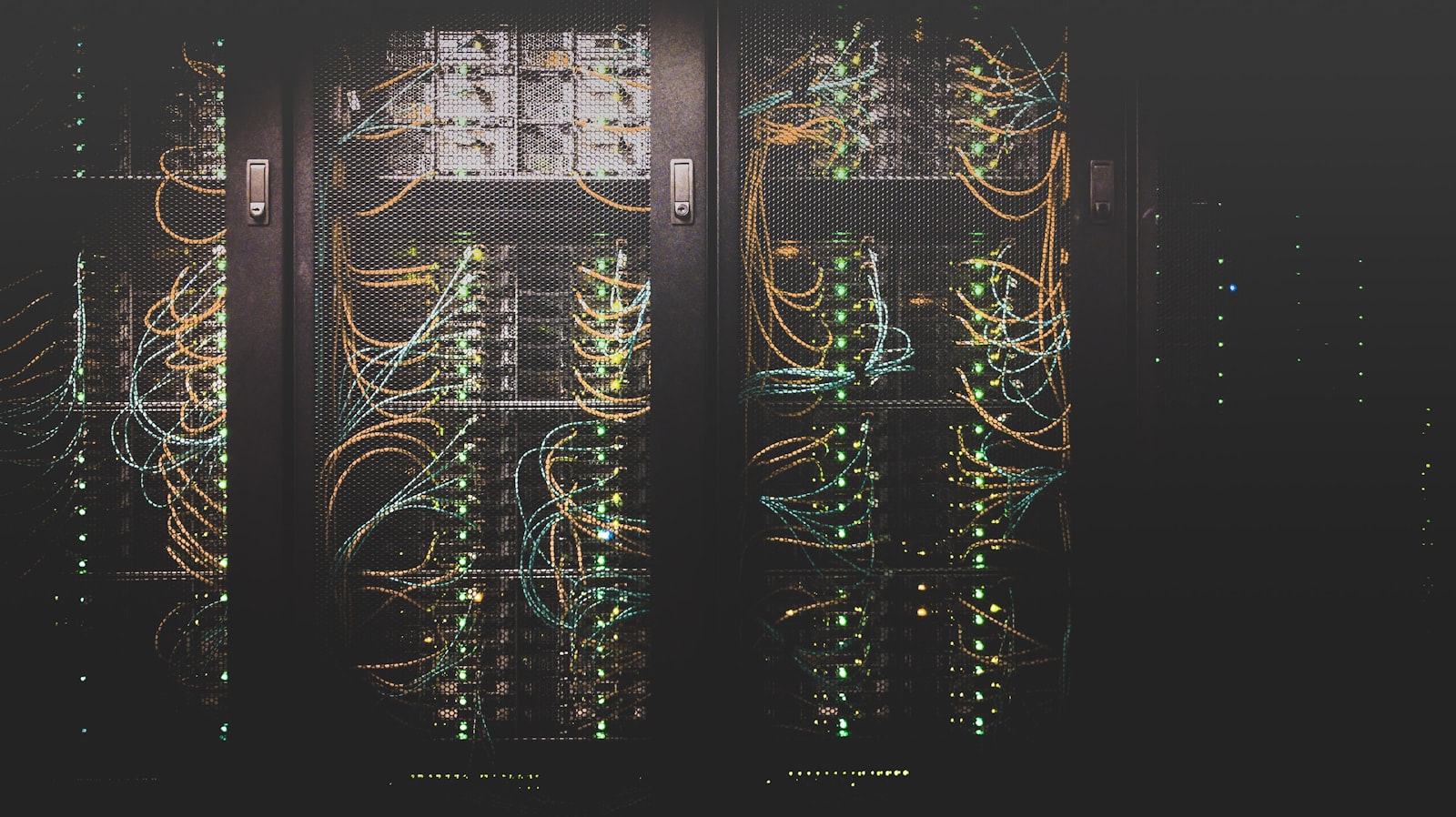
The Real Problem: IT Asset Management Without Real Visibility
Most ITAM tools today focus on the logical layer, meaning the assets that are recorded within the system. The issue is that this does not accurately reflect the actual operational state of those assets.
This creates a critical gap between recorded data and real-world conditions. It may not be obvious in day-to-day operations, but it becomes a significant risk at critical moments.
For example:
- A server may appear healthy in the CMDB, while its performance is already degrading
- A GPU node may be online, but operating near thermal limits
- Devices marked as healthy may already show early signs of hardware failure
- Some racks may be under heavy load, yet the issue is only noticed once performance is affected
These situations do not arise from a lack of asset management, but from the lack of real-state awareness. Without access to actual infrastructure conditions, ITAM becomes a recording system rather than a decision-support tool.
Sensaka Approach: IT Asset Management That Starts from Reality
Sensaka takes a different approach. Instead of starting from the software layer or CMDB, it begins directly at the physical layer.
The key idea is to avoid relying on operating systems or applications to describe assets, and instead retrieve information directly from the assets themselves.
Through out-of-band monitoring, the platform can access device data even before the operating system boots, and continuously collect runtime data from servers, storage, network devices, and GPUs. This process does not depend on agents or operating system environments.
At the same time, the platform leverages built-in hardware sensors to collect real-time data. This goes beyond system-level visibility and extends into component-level assets, such as power supplies, fans, and GPU modules. As a result, asset management moves from a device-level view down to a component-level understanding. It may seem like a technical implementation detail, but it fundamentally shifts the boundaries of IT asset management.

1. More Complete Asset Discovery
Traditional discovery methods rely on agents or network scans. They work when systems are running normally, but once systems fail, data gaps quickly appear.
Sensaka connects directly to hardware management interfaces, enabling automated discovery across multi-vendor environments while capturing more granular hardware details, including configuration, status, and component-level data.
The result is more complete asset visibility, independent of operating system status. Even powered-off or failed devices can still be identified.
In practice, this is often more important than feature depth.
2. Lifecycle Management Based on Real-Time Data
Lifecycle management is central to ITAM, yet many systems rely on periodic updates, which leads to outdated information.
Sensaka uses continuous synchronization to update asset status in real time. From procurement to retirement, all changes are automatically recorded, ensuring consistency and traceability.
Asset changes are no longer dependent on manual input. Events such as device onboarding, configuration updates, or component replacement are automatically detected and reflected in the system. This kind of automated asset change tracking reduces human error and keeps data aligned with reality.
Compared to traditional periodic updates, this approach better reflects actual operating conditions and reduces the problem of stale data.
3. Deep Hardware-Level Monitoring
Most ITAM tools stop at the inventory level and provide limited visibility into underlying system behavior.
In reality, many issues originate at the hardware layer, such as thermal anomalies, power fluctuations, or component failures.
Sensaka directly captures health metrics such as temperature, power consumption, and system status, and can identify early warning signals before they impact business operations.
This shifts IT asset management from passive tracking toward proactive management.

4. Integrating Energy Data into Capacity Planning
In modern data centers, IT assets are not only resources but also major sources of energy consumption.
Managing assets purely by count is no longer sufficient.
Sensaka incorporates power and thermal data into asset management. By analyzing device-level metrics, it provides more concrete inputs for capacity planning. This reduces reliance on assumptions and improves rack-level efficiency.
Over time, this has a measurable impact on cost control.
5. Scalability Through Agentless Architecture
Traditional ITAM systems often rely on agents, which introduce compatibility issues, resource overhead, and operational complexity as environments scale.
Sensaka adopts an agentless, out-of-band architecture that runs independently of production systems and does not consume compute resources. It continues to operate even when systems fail.
This design scales more effectively in complex environments such as AI data centers or multi-OS infrastructures.
IT Asset Management Is Becoming Infrastructure Intelligence
IT asset management is shifting from a simple record-keeping function to a layer that reflects the overall state of infrastructure.
The questions it needs to answer have changed. It is no longer just about what assets exist, but also about their condition, performance, and potential risks.
These capabilities depend on access to real-time data.
The value of Sensaka lies in bringing these capabilities together, positioning ITAM not just as a system of record, but as a tool for real operational decision-making.
Final Thought
If an IT asset management system cannot reflect the real state of hardware, then its data will always have gaps.
In complex environments, those gaps translate into risk.
The future of IT asset management is less about recording assets and more about understanding infrastructure. That understanding depends on visibility into the physical layer. Sensaka is not the only approach, but it is one that starts from the problem itself.
Related reading: Looking for a CMDB and asset discovery solution? See our evaluation of what IT teams are choosing after the Freshworks acquisition.
Read: Device42 AlternativeReference: IT asset management.
Sensaka iDCOS: Unified CMDB & Infrastructure Operations
Connect physical asset discovery with logical CMDB topology, automated lifecycle tracking, and zero-touch compliance.
Related articles & analysis