
The 15x Fiber Density Explosion
That roughly 15x increase reflects the explosive growth in east-west traffic required by AI workloads. Traditional data centers were designed for north-south traffic — requests coming in from users, responses going out. AI training clusters flip that model entirely.
In a distributed training job, GPUs must communicate constantly with each other, exchanging gradients and model updates across the cluster. This creates massive east-west traffic that legacy network architectures simply weren't designed to handle. For a deeper look at how this reshapes physical infrastructure, see our analysis of NVIDIA's 800V DC architecture and how AI is becoming local infrastructure.
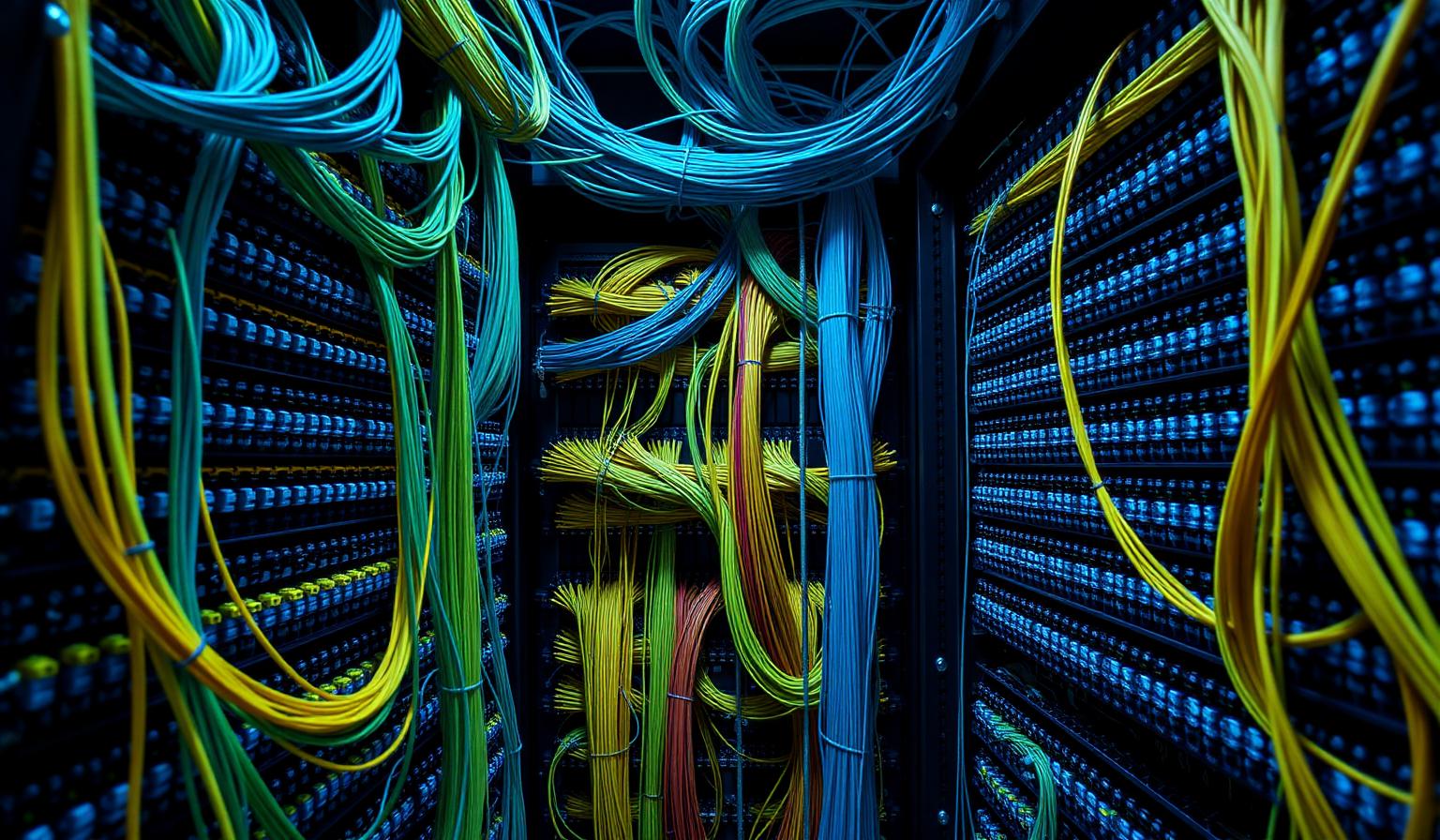
Traditional hierarchical flows, moderate interconnect density
Massive parallel GPU communication, spine-leaf architecture
From Three-Tier to Spine-Leaf
This change is also architectural. Traditional three-tier networks are giving way to spine-leaf, non-blocking designs that prioritize low latency and zero congestion. Instead of hierarchical traffic flows, AI clusters demand massive parallel communication between GPUs, resulting in far more direct interconnects and significantly higher fiber intensity.
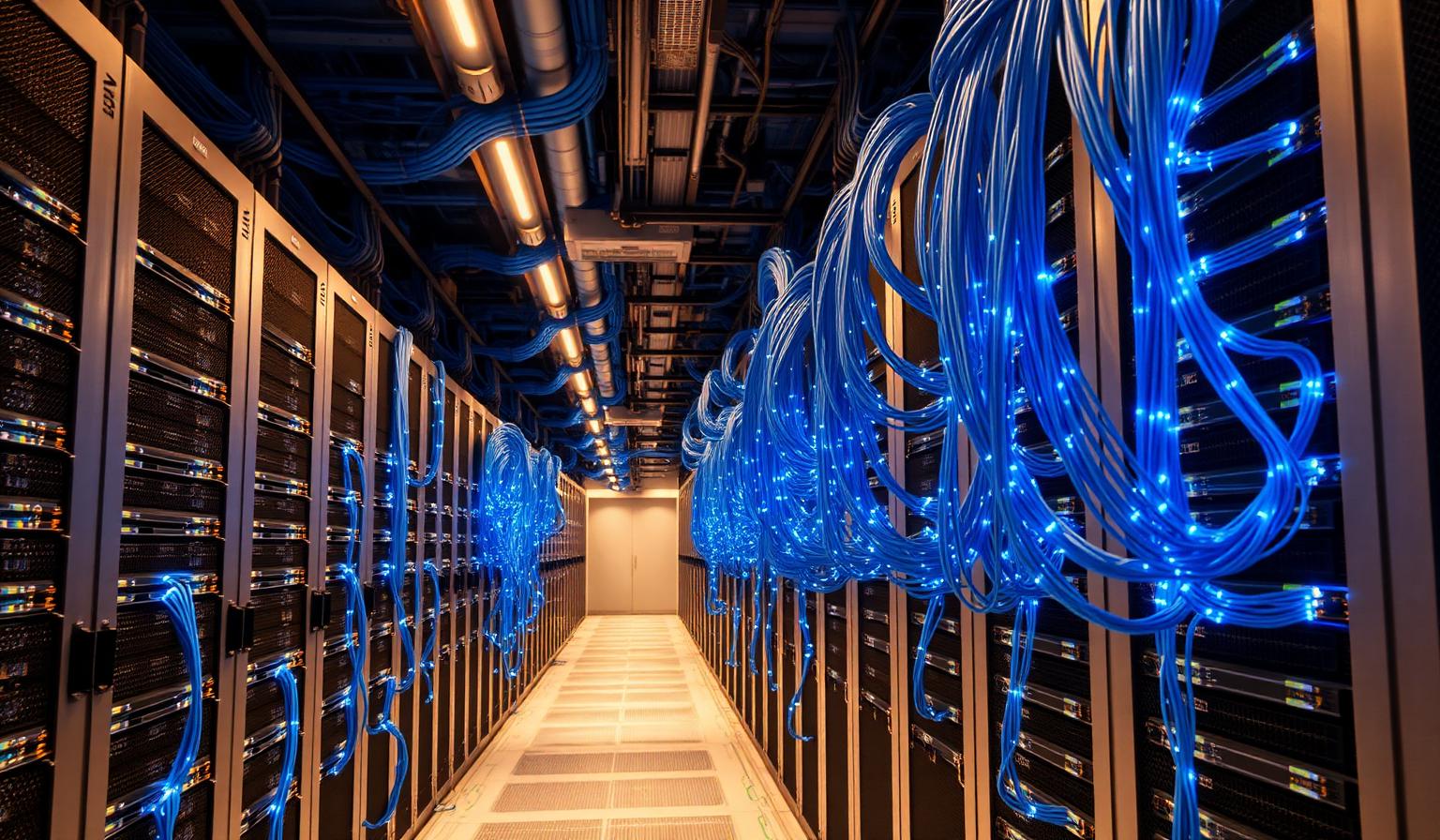
Three-Tier to Spine-Leaf
Traditional hierarchical networks are giving way to non-blocking, low-latency spine-leaf designs that prioritize east-west traffic between GPUs.
Zero Congestion Design
AI workloads demand predictable latency. Modern data centers are engineered to eliminate congestion points that would throttle training pipelines.
Direct Interconnects
Instead of traffic flowing up and down hierarchy layers, AI clusters require massive parallel communication with significantly higher fiber intensity.
Why DCIM Is Becoming Mission-Critical
But raw infrastructure is only part of the story. Managing this level of complexity is becoming a major challenge. This is where DCIM (Data Center Infrastructure Management) platforms come in. In AI environments, DCIM is no longer just about monitoring power and cooling. It must track high-density fiber connections, optimize network topology visibility, and ensure operational efficiency at scale. See our DCIM comparison for how leading tools stack up, and our take on RMM vs DCIM.
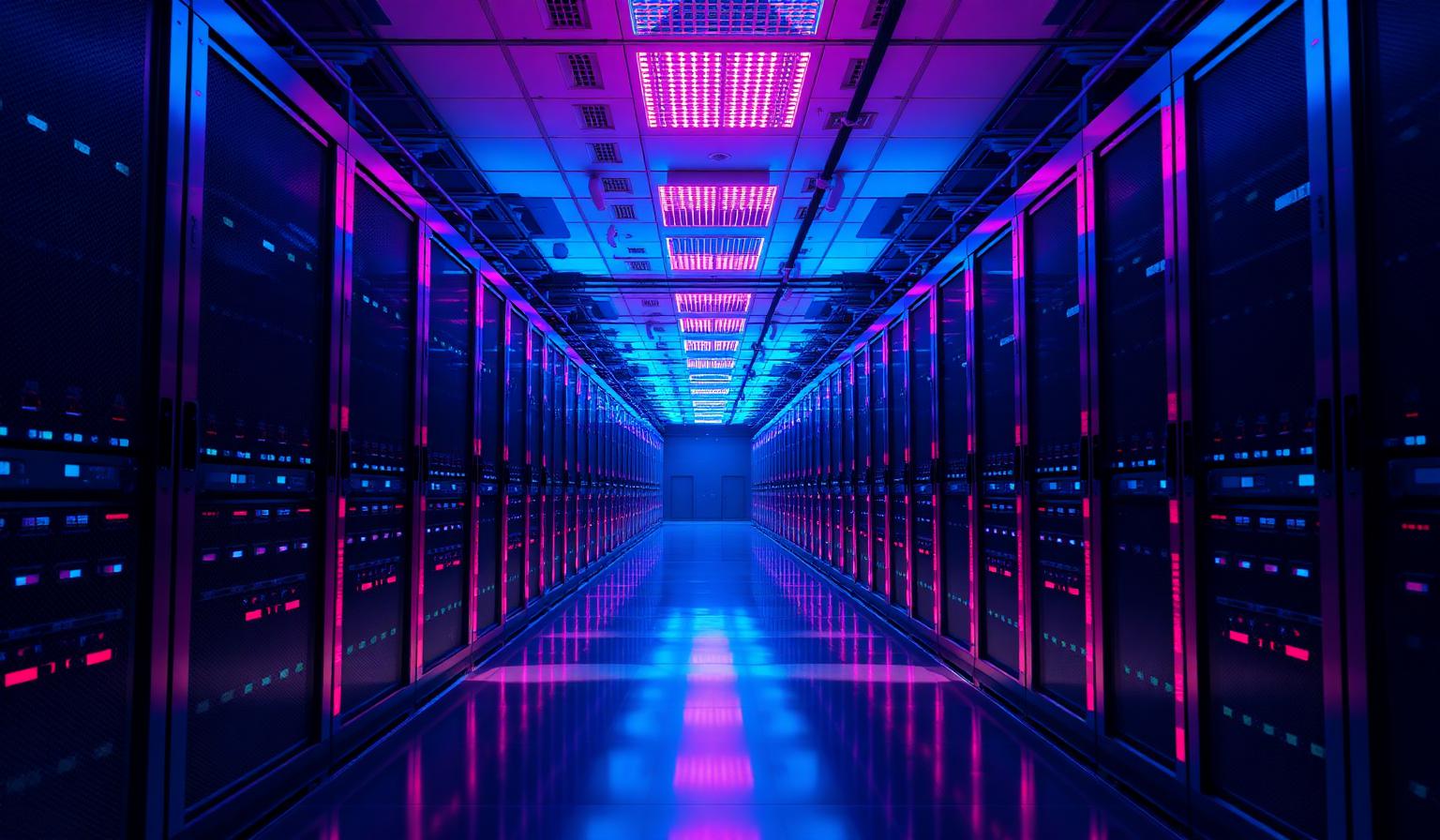
High-Density Fiber Tracking
DCIM must now track 800–1,000 fiber cores per rack, manage patch panel connectivity, and maintain accurate cable documentation at unprecedented scale.
Network Topology Visibility
Understanding spine-leaf architecture, monitoring inter-switch links, and visualizing east-west traffic patterns becomes essential for operations.
Operational Efficiency at Scale
With 15x more connections to manage, manual processes break down. Automation, accurate asset tracking, and real-time visibility become operational necessities.
The Evolving Skill Set
The implication for professionals is clear. The skill set is evolving. Understanding optical networking, high-density cabling, and modern DCIM platforms is quickly becoming essential for roles in data center operations, infrastructure engineering, and AI systems deployment.
Engineers who understand both the physical layer — fiber types, connector standards, cable management — and the operational layer — DCIM platforms, network topology, power and cooling — will be in high demand as AI infrastructure scales.
The Real Bottleneck: Connectivity
As AI continues to scale, the real bottleneck may not be compute but connectivity. Those who understand how to manage both the physical and operational layers of this new infrastructure — including hardware-level monitoring and out-of-band visibility — will be in high demand.
The shift from 40–80 fiber cores to 800–1,000 per rack isn't just a cabling challenge. It's a fundamental rethinking of how data centers are designed, operated, and managed. The infrastructure that served cloud computing well is being rebuilt for AI — denser, faster, and far more complex. Our GPU power case study shows what happens when that visibility is missing.
Verdict
The transformation from legacy to AI data centers represents one of the most significant infrastructure shifts in decades. The 15x increase in fiber density, the move to spine-leaf architectures, and the critical role of modern DCIM platforms all point to the same conclusion: this is not an incremental upgrade. It is a complete redesign.
For infrastructure professionals, the message is clear. The skills that served traditional data centers — server administration, basic network management, conventional monitoring — are necessary but no longer sufficient. Understanding optical networking, high-density fiber management, and AI-optimized DCIM platforms is becoming essential.
The infrastructure teams that master both the physical layer complexity and the operational visibility required by AI workloads will define the next era of data center operations. Those who don't will find themselves managing legacy infrastructure while the industry moves forward.
Ready for AI-scale infrastructure management?
DCIM built for high-density fiber, spine-leaf networks, and AI workload visibility — with EU compliance built in.